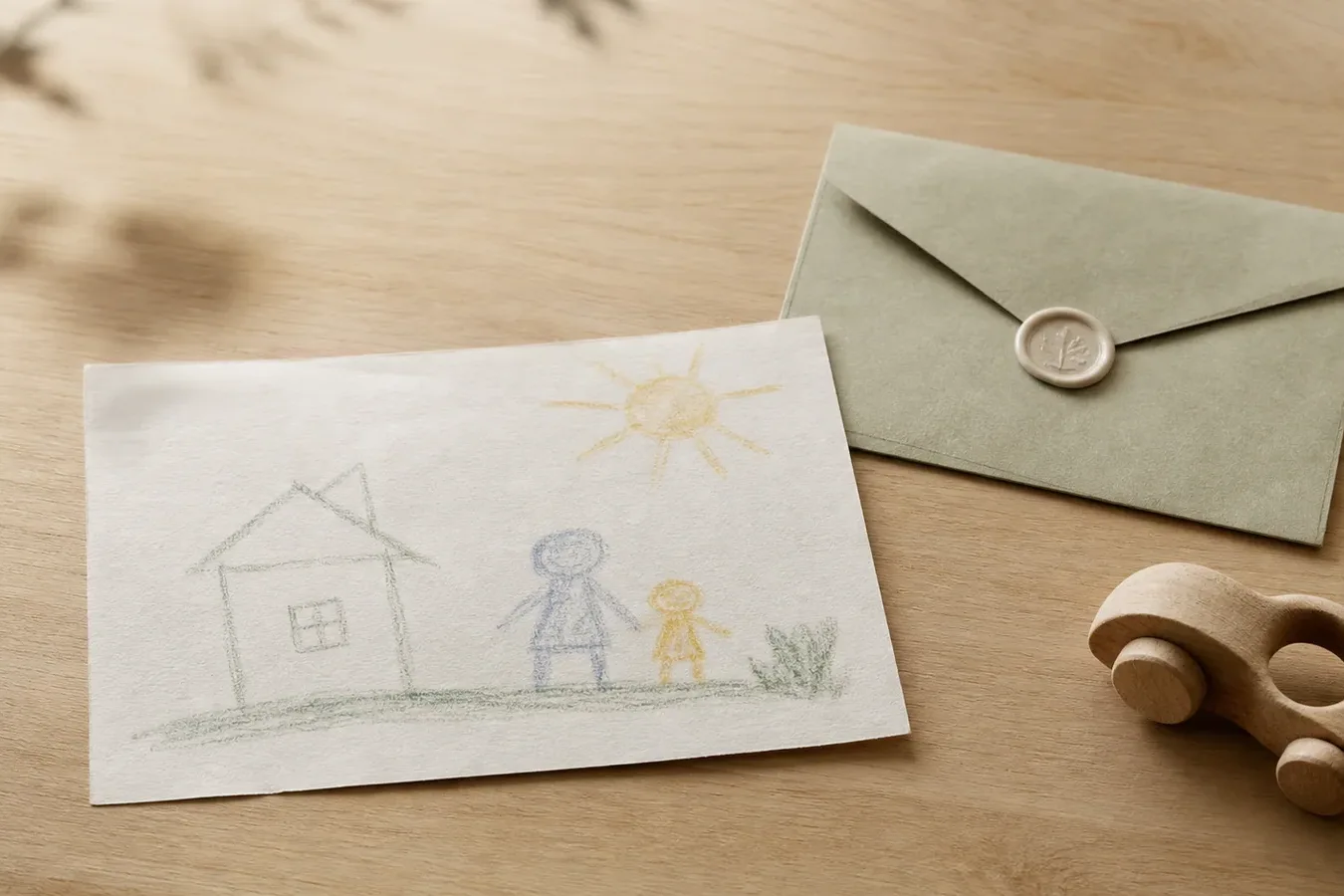
Children need to hear the truth, but the way it is communicated must match their age. With children under six, it is important to remember a feature of early development: they often feel that everything in the world is connected with them. If a father leaves often or is away for a long time, a child may imagine that it happened because of them.
When adults do not explain the real reason, they leave space for fantasy, and guilt often appears in that space. It may seem possible to conceal the truth, but during a war it cannot be hidden completely. A child hears news and fragments of conversations and senses their mother’s emotional state.
If a child discovers the truth in another way, fear may be joined by mistrust: why was this hidden from me? Feelings then remain inside, with no one to share them with.
It is worth asking honestly what prevents a mother from having this conversation. Often it is fear of her own emotions: she is already overwhelmed, and the child’s response feels frightening. A simple principle applies here: put on your own oxygen mask first, then the child’s. Caring for yourself makes it possible to be present with the child both physically and emotionally.
A child should therefore be told the truth in a form appropriate to their age. A preschool child needs simple words without frightening details or unnecessary predictions. Stories and images of courageous characters can help: Dad is defending the country, we believe in victory, we are waiting for him and keeping in touch as much as possible.
There is no need to fear the child’s emotional reaction. An emotion that can be expressed is better than one that remains trapped inside. When a child can cry, feel angry, ask questions and be heard, it helps them live through the experience without the added burden of self-blame or bodily symptoms.