Perinatal experiences and motherhood
When pregnancy, motherhood, and expectations of yourself have become too heavy
Pregnancy and motherhood can bring joy together with fear, exhaustion, guilt and a sense of losing the person you used to be. The work makes room for different feelings without asking you to match an image of the “ideal mother”.
- Format
- Individual consultation
- Fee
- UAH 1,500
- Duration
- 50 minutes
- Payment
- Payment is made separately on the day of each session
- Location and schedule
- Online or in person in Odesa · time and format are agreed in advance
You may recognise some of these experiences
- anxious thoughts take up a great deal of energy;
- your expectations of yourself have become too demanding;
- fatigue, irritation or wanting time alone brings guilt;
- changes in your body, roles and relationships are difficult to take in;
- love exists alongside fear, sadness or mixed feelings;
- it is difficult to make room for your own needs and recovery.
What can be explored in therapy
- anxiety and fear during pregnancy;
- guilt and internal demands;
- emotional exhaustion and the need for recovery;
- adaptation to changes in life, body and relationships;
- mixed feelings connected with motherhood;
- maintaining contact with yourself and your personal boundaries.
What the first session is like
In the first individual session, you can speak about what needs attention now without preparing a precise formulation in advance.
- we get acquainted and clarify the current situation;
- you decide how much personal detail you are ready to share;
- we discuss expectations, format and a possible rhythm of work;
- the decision whether to continue remains yours.
04
How I work with this theme
Psychodynamic understanding can help us notice inner conflicts, expectations and changes in identity. CBT tools may support an exploration of links between thoughts, emotions, bodily responses and actions. Katathym Imaginative Psychotherapy and creative elements are used only with consent when an experience is difficult to put into words.
- attention to anxiety, guilt, expectations and personal needs;
- respect for your pace and boundaries;
- room to explore changes in relationships and sources of inner support;
- no universal advice or requirement to feel the “right” way.

About the practitioner
About me
Yuliia Dicherenko
Psychologist · Candidate psychotherapist
I am Yuliia Dicherenko, a psychologist and candidate psychotherapist. My professional training includes perinatal psychology. I work under regular supervision, attend personal therapy and continue my professional education.
- Master’s degree in Psychology
- Over 3,500 hours of practice
- Regular supervision
- Personal therapy
- Continuing professional education
05
Relevant training and credentials

Perinatal and Postnatal Periods in Symbol Drama
View document ↗
Perinatal and Postnatal Periods Using Symbol Drama
View document ↗
Perinatal Health: Different Perspectives
View document ↗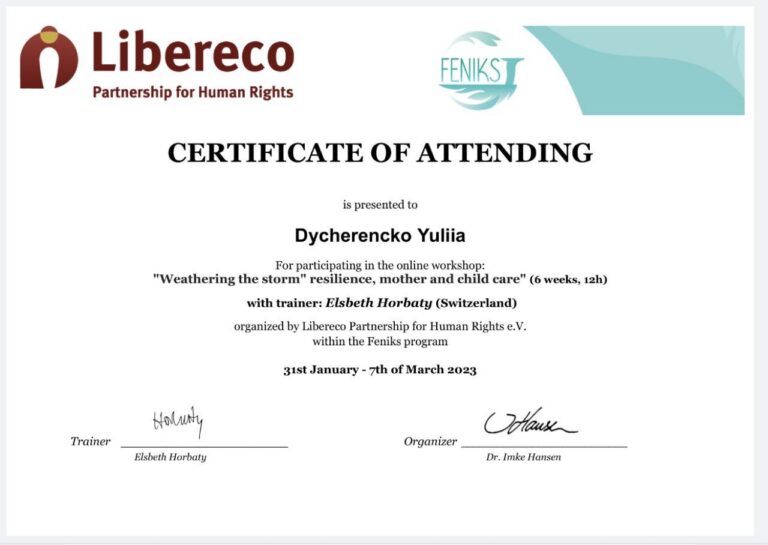
Weathering the Storm: Resilience of Mother and Child
View document ↗06
Related articles

How to Support a Child During Shelling
Different ways children respond to danger, honest age-appropriate language, and the support of a steady connection with an adult.
Read article →
Should You Tell a Child That Their Father Is at War?
Why a young child needs age-appropriate truth, and how to talk about war without frightening detail but also without a harmful secret.
Read article →FAQ
Frequently asked questions
Do I need a clearly formulated concern?
No. In the first meeting, we can clarify together what needs the most attention now.
Can I speak about mixed feelings about motherhood?
Yes. Psychological work can hold feelings that are difficult to acknowledge or discuss with people close to you.
Does a session replace medical care?
No. Psychological work does not replace medical monitoring, diagnosis or emergency care.
Can I attend online?
Yes. Individual work is available online or in person in Odesa; the format is agreed in advance.
What if I feel ashamed of my feelings or thoughts?
You do not need to fit an image of the “right” mother or hide mixed feelings. We can speak about them with care, without moral judgement or pressure to move quickly.
Does my partner need to attend?
No. This page describes individual work. If your concern is about your shared interaction and you are considering attending together, a different format needs to be agreed separately.
Can I know in advance how many sessions I will need?
No. This depends on your situation, needs and pace. After the first session, we can discuss what form of support feels manageable now.
Next step
Your feelings do not have to be the “right” ones
The first contact can be brief: name the theme and ask about an available format or time.